Iggy Pop
The Iguana – The Godfather of Punk
Origins and Early Years
James Newell Osterberg Jr. was born on April 21, 1947, in Muskegon, Michigan. A drummer in several garage bands, he founded The Stooges in 1967 in Ann Arbor with brothers Ron and Scott Asheton.
The Stooges and the Birth of Punk
The first two albums, The Stooges (1969) and Fun House (1970), produced by John Cale, were commercial failures but later became cornerstones of proto-punk. Raw Power (1973), mixed by David Bowie, pushed the sound even further.
His stage performances – shirtless, stage diving, self-mutilation – helped invent the very concept of punk performance art.
The Stooges disbanded in 1974 amid drug abuse and public indifference. Yet their posthumous influence became enormous: without The Stooges, there would be no Ramones, no Sex Pistols, and no punk rock. Rolling Stone ranked Fun House among the 500 greatest albums of all time.
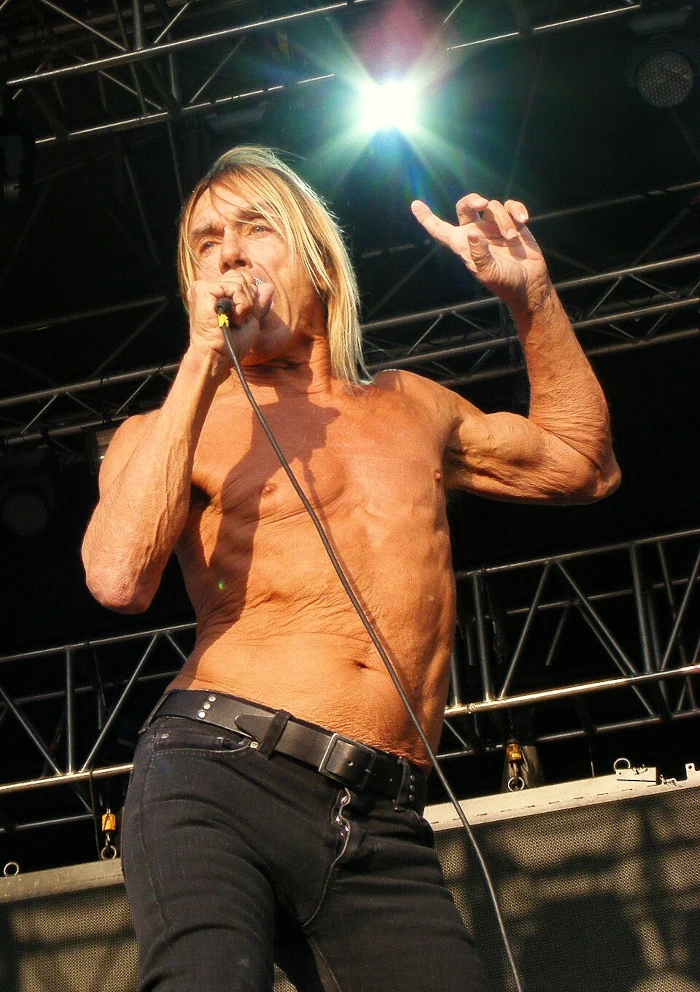
The Berlin Era and Solo Career
With David Bowie in Berlin, he recorded The Idiot and Lust for Life (both released in 1977). The song “The Passenger” became a classic. Lust for Life was featured on the soundtrack of Trainspotting (1996).
Iggy Pop was inducted into the Rock and Roll Hall of Fame in 2010 with The Stooges.
Iconic Guitar
Although primarily a singer, Iggy Pop is closely associated with the Gibson Les Paul and Fender Stratocaster played by Ron Asheton, while James Williamson famously used a Gibson Les Paul Custom.


